
iGenics: What It Is, What It Costs and Where to Buy It
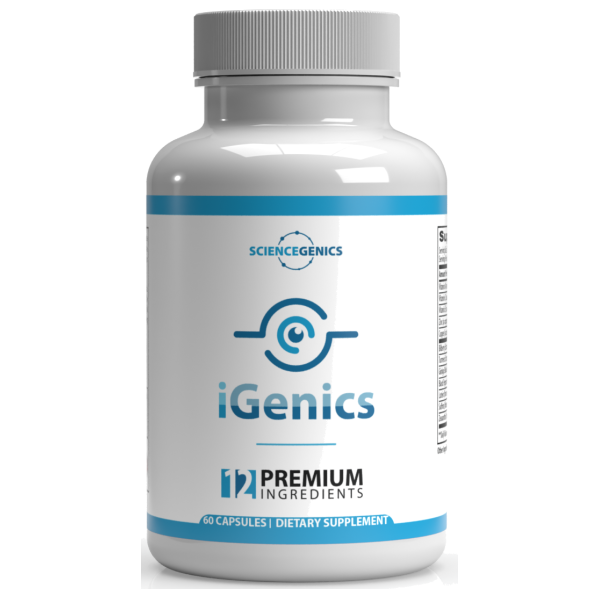
iGenics is a two-capsule eye supplement from Science Genics. It publishes an amount for every ingredient, so this page compares its doses with the best-known eye-vitamin formula, explains what each of the other ingredients has been studied for, covers who should check with a doctor or pharmacist first, what it costs and how the guarantee works. We are not the seller; for more detail, read our full review.
- 180-day money-back guarantee
- Facts checked 28 October 2026
- Independent, not the seller
iGenics in 30 seconds
✅ Pros
- A full label with an amount for every ingredient.
- Vitamin C, lutein, zeaxanthin and copper at or above the AREDS2 amounts, a moderate zinc dose and no beta-carotene.
- Saffron at 20 mg, the amount used in a small eye trial.
- Vegetable capsules, at $59 a bottle with an advertised 180-day guarantee.
❌ Cons
- Only 0.268 mg of vitamin E on the label, far below the AREDS2 amount, and an apparent label error for zinc.
- The AREDS2 results came from a specific group of older adults; there is no evidence of sharper eyesight in healthy eyes.
- Bilberry, turmeric and ginkgo add little evidence for eyesight.
- No refund policy, terms or privacy page on the seller’s site.
- The seller’s affiliate emails promise 20/20 vision within days.
What it costs
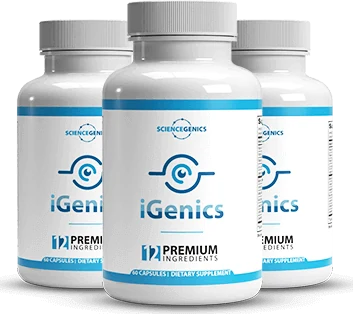
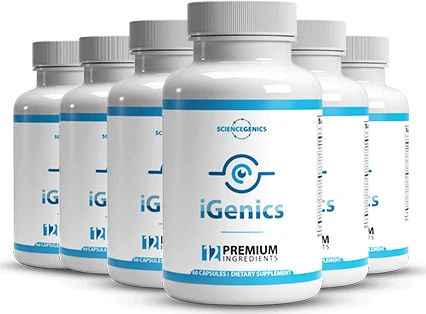
Prices as shown on the official site on 28 October 2026; they can change. The cost per day is over the supply shown, including any shipping charge.
What is in each serving
The Supplement Facts label lists an amount for every ingredient in two capsules:




| Ingredient | Per two capsules |
|---|---|
| Vitamin A (retinyl palmitate) | 900 mcg (100% of the Daily Value) |
| Vitamin C (calcium ascorbate) | 500 mg |
| Vitamin E (d-alpha tocopheryl acetate) | 0.268 mg (2% of the Daily Value) |
| Zinc | 20 mg |
| Copper (bisglycinate chelate) | 2 mg |
| Bilberry extract | 480 mg |
| Turmeric extract (95%) | 350 mg |
| Ginkgo biloba leaf powder | 80 mg |
| Black pepper extract | 20 mg |
| Lutein (from marigold) | 20 mg |
| Saffron | 20 mg |
| Zeaxanthin (from marigold) | 10 mg |
The only other ingredient is the vegetable capsule, so it suits vegetarians. Two label details look like printing errors: the zinc is described as “copper bisglycinate chelate”, and the vitamin E figure is about a thousandth of a typical eye-vitamin dose. Although the page calls ginkgo the main ingredient, bilberry and turmeric make up far more of each dose.
Illustrations by Health and Wellness Studies, not to scale.
How it compares with the AREDS2 formula
The best-studied eye-vitamin combination is the National Eye Institute’s AREDS2 formula, tested for several years in large trials of older adults who were selected and followed by eye doctors. Here is how iGenics lines up:
| Nutrient | AREDS2 daily amount | iGenics |
|---|---|---|
| Vitamin C | 500 mg | 500 mg |
| Vitamin E | 400 IU (about 268 mg) | 0.268 mg |
| Zinc | 80 mg (25 mg also tested) | 20 mg |
| Copper | 2 mg | 2 mg |
| Lutein | 10 mg | 20 mg |
| Zeaxanthin | 2 mg | 10 mg |
| Beta-carotene | Not included | Not included |
Vitamin C, copper, lutein and zeaxanthin match or exceed the trial amounts. The 20 mg of zinc is close to the 25 mg dose AREDS2 also tested, with no apparent difference in results, and leaving out beta-carotene follows AREDS2’s own change. The vitamin E, as printed, is the clear gap. Two further points: the AREDS2 results applied to the group studied, and the trials did not show sharper eyesight in people whose eyes were healthy.
The other ingredients, at a glance
- Saffron: in a small three-month trial in older adults, 20 mg a day, the amount in iGenics, improved visual acuity slightly, by less than one letter on an eye chart.
- Bilberry: long sold for night vision, but a systematic review found the four most recent randomised trials were all negative.
- Ginkgo: studied mostly for memory, with only a few small trials for the eyes.
- Turmeric and black pepper: no trials for eyesight; the black pepper extract is there to help the body absorb turmeric’s curcumin.
Lutein and zeaxanthin: supplement and food
Lutein and zeaxanthin are yellow pigments that collect in the centre of the retina, the part of the eye used for sharp, detailed vision. The body cannot make them, so they come from food or supplements. iGenics provides 20 mg of lutein and 10 mg of zeaxanthin a day, more than most people get from food.
A typical Western diet supplies around 1 to 3 mg of lutein a day. Cooked spinach and kale are among the richest sources, with sweetcorn, peas, egg yolks and orange peppers adding smaller amounts. Because both pigments dissolve in fat, eating them with a little oil, or taking the capsules with a meal, helps absorption. Food sources also bring fibre and other nutrients that a capsule does not, so a supplement works best alongside them rather than instead of them.
What the marketing says
The order page itself is fairly restrained: it says iGenics “supports clearer vision” and a healthy inflammatory response, and it shows the full label. It also calls the AREDS2 ingredients “vision restoring”, which goes beyond what the trials found. The emails the seller writes for affiliates go much further, promising to “restore your 20/20 eyesight naturally” within days with a “12-second eye trick”. No supplement has been shown to do that, so if an email like this brought you here, weigh it against the label and the research above.
Who should check first
- Blood thinners: ginkgo and turmeric may raise the risk of bleeding. Check with your doctor if you take warfarin, aspirin or similar medicines, and stop before surgery.
- Other regular medicines: black pepper extract can change how some medicines are absorbed, so ask a pharmacist.
- Zinc: 20 mg is within the adult upper limit of 40 mg a day; avoid adding other zinc supplements.
- Other eye vitamins: do not combine iGenics with a second eye formula.
Blurred or changing vision has many possible causes, and an eye doctor can find out which. Sudden flashes of light, a shower of new floaters, or a shadow or curtain across your vision need an eye doctor the same day.
Everyday habits for your eyes
Our eye health guide covers the evidence for eye supplements in more detail.
Which package makes sense?
One bottle costs $59 plus $9.99 shipping. Three cost $147 ($49 each); the order page shows both “free shipping” and “$9.99 shipping” on this option, so check the total at checkout. Six cost $234 ($39 each) with free shipping, two e-books and a bonus bottle of another Science Genics supplement. That works out to about $2.30, $1.63 and $1.30 a day.
With a full label and an advertised 180-day guarantee, iGenics is straightforward to try. If you want to see how you get on with two capsules a day, one bottle is enough; if you have already decided to take it for several months, six bottles give the lowest price per bottle.
- One bottle ($68.99 with shipping) for a first month.
- Six bottles ($234) for the lowest price per bottle, free shipping and the bonuses.
How to take it
- The dose: two capsules a day.
- With a meal: lutein and zeaxanthin dissolve in fat, so a meal with some fat helps the body absorb them.
- One formula only: do not add another eye vitamin or extra zinc.
- Keep your eye appointments: a supplement is no substitute for regular checks.
- Stop if you notice unusual bruising, stomach upset or headaches, and ask a pharmacist.
The 180-day guarantee
The order section shows a 180-day money-back guarantee badge, but the site has no separate refund policy, terms or privacy page explaining how to claim it, whether opened bottles must be returned, or who pays return postage.
- Ask before returning anything: email support@sciencegenics.com, or use ClickBank’s order support at clkbank.com, and keep your order confirmation.
- Returns go to Science Genics Shipping in Tallmadge, Ohio, as the seller instructs.
- Keep proof of postage until the refund appears on your statement.
The page footer also says the company may share buyers’ names, contact details and purchase history with third parties for offers and targeted advertising.
👍 It may suit you if…
- You want an eye supplement with every amount on the label.
- You want lutein, zeaxanthin and vitamin C at or above the AREDS2 amounts, without beta-carotene.
- You take no blood thinners, or your doctor has agreed.
⚠️ Skip it, or ask first, if…
- You take warfarin, aspirin or other blood thinners: ask your doctor first.
- You already take another eye vitamin or extra zinc.
- You expect sharper eyesight within days: no supplement has been shown to do that.
- You notice sudden changes in your vision: see an eye doctor first.
Before you buy
Online at visionbreakthrough.com, from Science Genics, with ClickBank processing the order. This page is an independent guide, not the official website.
You pay on a ClickBank checkout page as a one-time payment. Check the shipping on three bottles before you confirm, and decline any further offers you do not want.
One bottle costs $59 plus $9.99 shipping, three cost $147 and six cost $234 with free shipping and bonuses.
An advertised 180-day money-back guarantee. Contact support@sciencegenics.com before returning anything.
Questions people ask about iGenics
Is this the official iGenics website?
No. This is an independent guide by Health and Wellness Studies. iGenics is sold by Science Genics at visionbreakthrough.com, with orders processed by ClickBank.
What is iGenics?
A two-capsule eye supplement with vitamins A and C, zinc, copper, lutein, zeaxanthin, saffron, bilberry, turmeric, black pepper and ginkgo, with every amount on the label.
What are the ingredients in iGenics?
Per two capsules: vitamin A 900 mcg, vitamin C 500 mg, vitamin E 0.268 mg, zinc 20 mg, copper 2 mg, bilberry 480 mg, turmeric 350 mg, ginkgo 80 mg, black pepper 20 mg, lutein 20 mg, saffron 20 mg and zeaxanthin 10 mg.
How does iGenics compare with AREDS2?
It matches or exceeds the AREDS2 amounts of vitamin C, copper, lutein and zeaxanthin, has a moderate 20 mg of zinc and no beta-carotene, but its label shows far less vitamin E.
Will iGenics improve my eyesight?
There is no evidence that eye vitamins sharpen eyesight in healthy eyes. The AREDS2 results applied to a specific group of older adults, and iGenics itself has not yet been tested.
Is iGenics safe?
Its amounts are moderate, but ginkgo and turmeric may raise bleeding risk with blood thinners, and black pepper extract can affect how some medicines are absorbed. Ask a pharmacist if you take regular medicine.
How do you take iGenics?
Two capsules a day, best with a meal so the lutein and zeaxanthin are absorbed. One bottle lasts 30 days.
Why is there so little vitamin E?
The label lists 0.268 mg, about a thousandth of the AREDS2 amount. It may be a printing error, but as printed, iGenics provides very little vitamin E.
Is iGenics vegetarian?
Yes. The only other ingredient is a vegetable capsule.
Does iGenics contain beta-carotene?
No. Its vitamin A comes as retinyl palmitate at 100% of the Daily Value, and like the AREDS2 formula it leaves beta-carotene out.
Why is saffron in iGenics?
Saffron has been studied for eyesight in a small three-month trial, where 20 mg a day, the amount in iGenics, gave a slight gain of less than one letter on an eye chart.
How much does iGenics cost?
One bottle costs $59 plus $9.99 shipping, three cost $147 and six cost $234 with free shipping, two e-books and a bonus bottle.
Is iGenics a subscription?
No, it is a one-time payment on a ClickBank checkout page.
Does iGenics have a money-back guarantee?
The order page shows a 180-day money-back guarantee, but there is no separate refund policy. Email support@sciencegenics.com, or contact ClickBank’s order support, before returning anything.
Is iGenics sold on Amazon?
It is sold at visionbreakthrough.com through ClickBank. A bottle from a marketplace does not come from the seller and may not be covered by the guarantee.
Want the full picture?
Our iGenics review covers the label, the research, the sales claims and how we scored it.